Part I School Digital Module 0: Introduction to the Integrated Comprehensive Systems for Equity Framework and Process
© 2012 to 2026. Elise M. Frattura and Colleen A. Capper. Part I School Digital Modules for ICS Equity. All rights reserved. You may not reproduce, modify, or distribute this work without written consent from the authors. Please email info@icsequity.org to obtain such permission.

Learning Targets
- Access the ICS Digital Modules.
- Define Equity through the ICS Framework.
- Describe the ICS Framework and Implementation Process.
- Identify School Leadership and District Leadership Team membership and roles.
About the ICS Digital Modules
Digital Module Learning Targets
Each ICS Digital Module begins with Learning Targets. These Learning Targets are assessed at the end of each Digital Module within the ICS Applications.
Digital Module Materials
Each ICS Digital Module includes a Materials section at the top of the Digital Module page. Resources for the Digital Module, including the PowerPoint and any tools, can be found here.
The ICS Equity Action Plan
The ICS Equity Action Plan can be found within the Materials section of this Digital Module. The ICS Equity Action Plan template is for SLTs and includes the following for each Digital Module:
– The ICS Implementation Fidelity List as a reminder to SLTs of the facilitation steps for each Digital Module.
– A column to describe the current staff knowledge of the current Digital Module, such that the team can build on that knowledge when facilitating the Digital Module with staff.
– A column for the team to reflect on aspects that they should remember/consider when facilitating each particular Digital Module with staff.
Digital Module User Check-Ins and Implementation Fidelity
At the end of each ICS Digital Module, we include the following ICS Applications:
1. Digital Module Checking for Understanding (to be completed by all staff)
Each staff member reads each Digital Module prior to the SLT planning and facilitating of each Digital Module. After doing so, each staff member completes the Checking for Understanding ICS Application at the end of the Digital Module to address two questions. What resonated with you with this Digital Module? What gives you pause? The SLT then reviews the staff responses and incorporates this information into the planning of the Digital Module facilitation.
2. Digital Module in Practice (to be completed by all staff)
The Digital Module in Practice ICS Applications is completed post-facilitation of the Digital Module and prior to the next module facilitation. This ICS Application checks staff members’ understanding and application of the Digital Module. The SLT will review the staff member responses to help the SLT gauge staff learning to inform planning.
3. School Leadership Team Implementation Fidelity Check (to be completed by SLT members only)
SLT Members should complete this ICS Application. This guides SLT members in planning and ensures all implementation steps have been completed.
All other staff should skip through this ICS Application’s questions without answering and then submit this ICS Application in order to move forward to the remaining ICS Applications. In order to skip the School Leadership Team Implementation Fidelity Check, click on that ICS Application, scroll to the bottom of the questions without answering them, and then select ICS Application Summary. On the next page, select Finish ICS Application. This will allow you to complete the Digital Module without answering the questions in the SLT Implementation Fidelity Check.
- Current Practices Based on Common Assumptions
Activity #1: List ways your district/school has addressed inequities across beliefs, policies, systems, structures, and/or practices. (8 minutes of small group discussion, and share out 1 or 2) (Groups also decide group roles for the day, including the facilitator, communicator (person who shares out), timekeeper, and recorder (person who takes notes).
Our Previous and Current Equity Efforts
Dugan (2021) has identified what they define as 10 Traps, Tropes, and Pitfalls of education equity efforts as follows:
- Doing Equity: Treating equity as a series of tools, strategies, and compliance versus a whole person, a whole system change process linked to culture, identity, & healing
- Siloing Equity: Locating equity work in a separate and siloed policy, team, or body
- Equity Warrior(s): Nestling equity with a single champion and holder of the vision
- Spray and Pray Equity: Engaging “equity experts” to drop in for a training with no ongoing plan for learning or capacity building
- Navel-Gazing Equity: Keeping equity work at the level of self-reflection and failing to penetrate the instructional core and/or school systems and structures (segregation, tracking)
- Structural Equity: Redesigning systems & structures without investing in the deeper personal, interpersonal, and cultural shifts
- Blanket Equity: Investing in a program or curriculum rather than building the capacity of your people to address equity challenges as complex and ongoing places of inquiry
- Tokenizing Equity: Asking leaders of color to hold, drive, and symbolically represent equity without providing support & resources to thrive nor engaging the entire staff in the work
- Superficial Equity: Failing to take time to build equity-centered knowledge and fluency, leading to behavioral shifts without understanding deeper meaning or historical context
- Boomerang Equity: Investing time and resources to understand your equity challenges but reverting back to recycled, status quo solutions.
Activity #2: Analyzing Our Equity Efforts
Which of the 10 Traps, Tropes, and Pitfalls have you experienced with your list of equity efforts? (Small group discussion, 8 minutes).
Given these traps, tropes, and pitfalls of our previous and current equity efforts, it is not surprising that inequities often persist in spite of our efforts.
ICS provides a Framework and Process to pull together and build on our previous equity efforts. ICS also provides a Framework and Process that will advance your district’s strategic plan and school improvement plans.
Defining Equity
We define equity as high-quality teaching and learning absent any experiences of oppression or marginalization.
The ICS Framework and Process
Oppression and marginalization are historical, structural, cultural, and systemic. As a result of that fact, any equity changes we are trying to make must address the entire educational system, or requires what we term equity systems change.
Changing the entire system to the benefit of literally all students in the district can be a formidable and complex task, given that we are pushing against hundreds of years of inequities in education (We will learn more about this educational history in Digital Module 1/Step 1). Districts often ask us, “Where do we even begin?”
To simplify the process and to be as pragmatic as possible, we created the Four Cornerstones of Integrated Comprehensive Systems:
Figure 1: The Four Cornerstones of Integrated Comprehensive Systems

When addressing students’ educational needs, educational leaders often spend a significant amount of time and resources in Cornerstone 3, Teaching and Learning, believing that fixing the content or delivery of instruction will raise student achievement. Thus, districts will implement, for example, Universal Design for Learning, culturally relevant pedagogy, or adopt new literacy programs. Yet, we are trying to change classroom practices within a broken system. For example, a third-grade teacher may become quite proficient at designing and delivering culturally relevant lessons, yet students of color, students who are multilingual, or students with disabilities often must leave the classroom to go someplace else to get their learning needs met. We will learn in Digital Module 1/Step 1, in the equity research (Digital Module 4/Step 4) and in our equity audit data (Digital Module 6/Step 6) how these practices may not be beneficial to students.
As another example, we may have high school teachers who effectively teach Advanced Placement courses, yet these courses are not demographically representative of the school as a whole. These examples show the limitations of trying to fix the classroom within a broken system.
Other school districts attempt to address inequities within the system by focusing on identity development efforts in Cornerstone 1. Thus, districts may provide professional learning in racial identity development or becoming more culturally competent educators. Yet, districts then struggle with how to apply this personal learning to school and classroom practices. As one high school principal told us, “We were saying to our Black students how smart and capable they were, but the structure of our school was delivering the opposite message.”
Thus, the Four Cornerstones of ICS address the entire district system. Each of the Four Cornerstones includes a series of ICS Steps. We describe these steps as not a recipe. However, our over thirty years of experience as teachers, administrators, preparing educational leaders at the university, and in partnership with districts has taught us that indeed, the order of the steps makes a significant difference in student outcomes. We have developed a Digital Module for each step in the process.
- ‘Operationalizing’ Our Work
The following section describes the ‘Operationalizing’ of the work through the ICS implementation process and the three teaming structures necessary to accomplish the goals of each Cornerstone.
The ICS Implementation Process
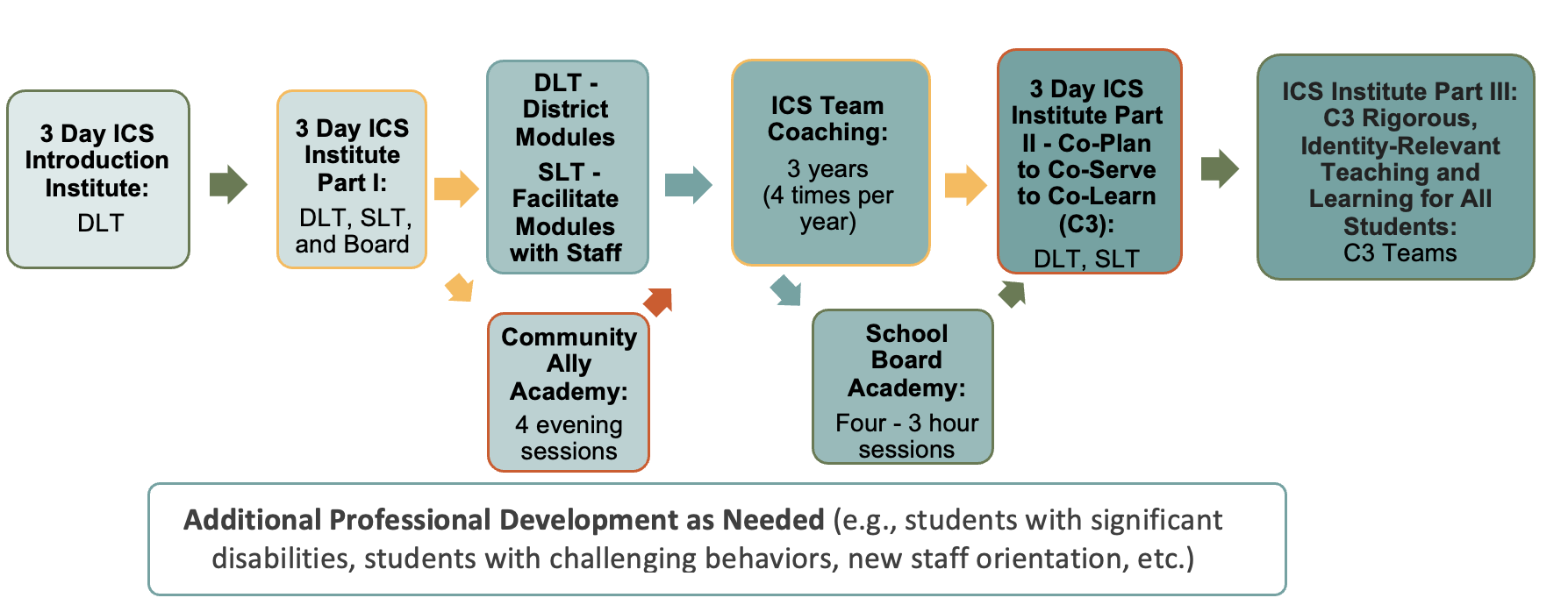
Figure 2: The ICS Implementation Process
YEAR 1
ICS Overview: Based on implementation science, the ICS Implementation Process includes the following (see Figure 2 above). First, we provide a 2.5 hour overview for the District Leadership Team (DLT) (see details on the DLT below) and district principals. This overview provides more information about the ICS Framework and Process (using the Overview PowerPoint included in the Materials section of this Digital Module). The overview ensures that the School Leadership Team (SLT) membership is confirmed (see more details below) and prepares the DLT and principals for the ICS Equity Institute Part 1.
ICS Equity Institute Part 1: The ICS Equity Institute Part 1 spans 3 days. All members of the DLT and SLT attend ICS Equity Institute Part 1. School board members are invited as well. At this event, teams learn about the ICS Framework and Process. We address all of the steps in the process, emphasizing Digital Modules/Steps 1-6. ICS Equity facilitators facilitate each of the ICS Equity Digital Modules/Steps during the Institute, modeling for teams, how the teams will then be able to facilitate each Digital Module with the staff in their school. Nearly all that we say at the Institute for each Digital Module/Step is included in the written content of each Digital Module. Each of the activities we engage in for each Digital Module at the Institutes are included within each Digital Module. The PowerPoint that we show at the Institute for each Digital Module are included in the Materials section of each Digital Module.
In the first academic year of implementation, following attending ICS Equity Institute Part 1, the overarching goal of the SLT includes planning and facilitating Digital Modules 0-6 with staff. To do so, the SLT meets at least one hour per month to plan the facilitation. The SLT then meets at least one hour per month to facilitate that module with all staff.
Also, in the first academic year of implementation, the DLT meets at least once a month for one hour to work through the district leadership team modules. Details on this are included below.
In addition, the ICS Equity Coaching begins in Year 1 following the ICS Equity Institute Part 1. We provide coaching 4 times a year for 3 years, where we meet with each SLT and the DLT for 75 minutes to check in on progress, questions, and hiccups, and to provide guidance on the next steps, coaching forward to the next Digital Module.
YEAR 2
Year 2 of ICS Equity implementation focuses on preparing staff to function as Co-Plan to Co-Serve to Co-Learn (C3) teams. The actual function of C3 teams occurs in Year 3, with the focus of Year 2 being on preparing teams to do so.
ICS Equity Institute Part 2 – Co-Plan to Co-Serve to Co-Learn (C3): This event spans 3 days and includes a check-in on progress on Digital Modules 0-6 and then focuses on Digital Modules 7, 8, and 9, and all the details of C3 teams, including how to establish the teams with aligning staff expertise to student needs (Digital Module 7), the details of team function including how to schedule times to meet, the team agenda, preparation for and execution of the team time, the role of the ICS Equity Skills at a Glance, and team member roles (Digital Module 8). The event also includes details on how C3 teams design rigorous, identity relevant lessons that include the most effective teaching strategies (Digital Module 9).
In academic year 2, the SLT facilitates Digital Modules 7-12 with the staff. To do so, the SLT continues to meet once per month for one hour to plan each Digital Module facilitation and then meets at least once a month for one hour with all staff to facilitate each Digital Module. The DLT continues working through the DLT Digital Modules.
Similar to Year 1, ICS Equity coaching continues in Year 2.
YEAR 3
The foundational shift to C3 teams with staff expertise aligned to students who are proportionally assigned usually occurs in Year 3; for other schools the shift may occur in Year 4. Similar to Years 1 and 2, ICS Equity coaching continues.
Data Shifts: Though, ICS implementation occurs across three years, we do not need to wait 3 years for positive shifts in equity data. Instead, positive shifts in the equity data often occur within Year 1 and going forward, while working through Cornerstone 1, Digital Modules 1-6. This positive data shift within and after Year 1 results, in part, simply from the shifts in educator perspectives about students and families from deficit to assets-based, which results in perhaps minor but significant shifts in educator expectations of students and within classroom practice, as educators understand the history of public education and challenges to the current educational structure in their schools for students and staff (Digital Module 1), and begin to see all students as smart and capable while realizing the importance of person-first, assets-based language in how we talk about students and families (Digital Module 2). Within Year 1, educators begin to seek out and integrate the funds of knowledge of each student and their families (Gonzalez, Moll, & Amanti, 2005) into their lessons (Digital Module 2). Educators begin to become more self-aware of their own identity development and that of others different from themselves, including the students and families in their own classrooms (Digital Module 3). Educators begin to have a better understanding of the research on high-quality teaching and learning, to what extent their school and classroom practices reflect that research (Digital Module 4), and how principles of excellence based on that research (Digital Module 5) can guide their practices. Finally, the equity audit data (Digital Module 6) reflects back on the current school structure and provides a measurable baseline for progress.
The ICS Equity Process described above represents the best implementation of the ICS Equity Framework and Process and has yielded the most favorable outcomes in districts and schools.
ICS Community Equity Ally Academy: Many districts opt to include the ICS Community Equity Ally Academy in the ICS Implementation Process. This opportunity occurs after at least one semester of the SLTs Digital Module implementation with staff. This Academy is designed for community members who represent the district’s demographics, and occurs over a period of 4 sessions of 2.5 hours each session. The event introduces community members to the ICS Framework and Process, identifies ways the community can support the work, and provides information on how community members can take key aspects of the ICS Framework and Process back to their own spheres of influence in the community (e.g., churches, community organization, and workplaces).
ICS School Board Academy: Many districts also opt to include the ICS School Board Academy in the ICS Implementation Process. This Academy includes 12 hours of learning time divided into six-2 hour sessions or four-3 hour sessions. Some districts opt for the School Board Academy in the second semester or after the first year of implementation. Other districts offer the School Board Academy prior to or with their SLT and DLT engaging in the implementation in Year 1. School board members can also be invited to the ICS Overview and the ICS Equity Institute Part 1. Designed specifically for school board members, the Academy helps board members understand the ICS Framework and Process and how the Principles of Excellence (Digital Module 5) can guide all of their decision-making around policy.
Five Key Features of the ICS Framework and Process
First, the ICS Framework and Process provides a framework and process for all of the district’s efforts going forward. ICS is not a program, it is not an initiative, it is not a model, and it is not a set of diversity workshops. Instead, we define equity as high-quality teaching and learning for all students, which should be the focus of all the district’s work.
Second, ICS advances the learning of literally all students. Many view equity as a zero-sum game. That is, that this work is about a particular group of students. For families who believe their children are currently succeeding in school, they may wonder that if we engage in this work, then what is going to happen to their own children in the process? Yet, the data from districts implementing the work and the research shows that all students benefit. Students currently succeeding in the system and students currently struggling in the system also benefit. A rising tide lifts all boats.
Third, ICS is research and evidence-based, developed from over 45 years of research and as evidenced by districts engaged in the work.
Fourth, ICS develops the “collective equity capacity” of all educators via the District Leadership Team (DLT) and the School Leadership Teams (SLTs) who learn about the Framework and Process and who learn how to facilitate the work with all staff.
Fifth, ICS holds itself accountable based on the equity audit (Digital Module 6), in that we expect measurable progress that informs the ongoing improvement of the work.
The Five Key features of ICS mitigate and avoid the Traps, Tropes, and Pitfalls of typical equity efforts.
The Three ICS Teams:
The creation of three teams within the school and school district is essential to implement the ICS Framework and Process:
- The District Leadership Team
- The School Leadership Team
- The Co-Plan to Co-Serve to Co-Learn (C3) Team
The goal of all three teams is to develop each other’s collective equity capacityTM to eliminate inequities. The teams develop their collective equity capacity by working through the ICS Digital Modules with all staff, as detailed in the following sections.
District Leadership Team:
The District Leadership Team (DLT) usually includes members of the district office (e.g., the superintendent, human resources administrator, business administrator, curriculum and instruction director, director of special education and student services, technology director, and other key district office administrators).
The District Leadership Team’s primary role is to support the schools in implementing the ICS Framework and Process.
A second primary role of the DLT is to ensure that the district sends a consistent and sustained message about the importance of ICS implementation. In so doing, the DLT will ensure that all decisions align with the district’s equity non-negotiables or principles of excellence (see Digital Module 5). The DLT will also complete a three to five-year plan for staff and student alignment across the district (see Digital Module 7 in the District Modules).
Each member of the DLT is assigned as a District Liaison for each School Leadership Team (SLT). In that role, the DLT member will attend each of the monthly SLT module planning meetings for Digital Module facilitation and attends each of the monthly staff meetings where the SLT facilitates each Digital Module with staff. In attending these meetings, depending on the expertise of the DLT member, the DLT member could address ICS implementation questions, or learn from the SLT.
The DLT should then schedule a monthly time for a District Liaison check-in for each DLT member to check in on the ICS Implementation progress and challenges they have experienced at the schools.
The DLT also meets at least once per month for at least one hour to work through the ICS District Digital Modules. That work becomes the entire focus of the meeting. To do that work, we suggest that two members of the DLT volunteer to lead the facilitation of each Digital Module for the rest of the DLT. DLT members should come prepared by reading the assigned Digital Module in advance of the meeting. Similar to the SLTs ICS work, it will likely take more than one, one hour session to work through one Digital Module, and the work of one Digital Module can be extended over several monthly meetings.
“Working through the Digital Module” means reading the Digital Module and completing the activities within the Digital Module. The DLT partner pair facilitating the Digital Module rely on the PowerPoint included in the Materials section of the Digital Module and the activities embedded within the content of the Digital Module.
The DLT also helps School Leadership Teams schedule time once a month to plan the Digital Module facilitation or once a month as part of professional learning time to facilitate the Digital Modules with all staff.
School Leadership Team:
School Leadership Team (SLT) membership includes the principal, a general education teacher from each grade level, an allied arts teacher, a special education teacher, a teacher of students who are multilingual, a teacher of students labeled gifted, an interventionist, a reading teacher, and a school psychologist. The School Leadership Team includes about 8-10 members. This team should stay intact for the entire three years of the ICS Equity implementation (see the expectations included below).
School Leadership Team Expectations:
- The School Leadership Team (SLT) attends all three days of the ICS Equity Institute Part 1 (3 days in Year 1) and ICS Equity Institute Part 2 (3 days in Year 2).
- All SLT team members meet as a team at least once per month for at least one hour to plan the facilitation of the Digital Modules (the District office helps SLTs to make this time.).
- All SLT members meet at least once a month, for one hour to facilitate the current Digital Module with the rest of the staff (District office helps SLTs to make this time).
- All SLT members meet with the ICS Coach for 75 minutes, 4 times per academic year for 3 years.
Figure 3: SLT Learning Process: ICS Systems Change for High-Quality Teaching and Learning

Co-Plan to Co-Serve to Co-Learn (C3) Teams (see more details in Digital Modules/Steps 7, 8, and 9)
The C3 Teams are comprised of teachers who are best able to share each other’s expertise and develop their Collective Equity Capacity to better serve the range of learners at their grade level, block, house, or academy (smaller unit of students who are proportionally represented).
Members of the Co-Plan to Co-Serve to Co-Learn (C3) Teams should include all individuals assigned to the specific grade level, academy, block, or content area, to educate a proportional representation of students. Each C3 Team must include those teachers that best can support the range of students at that grade level through the sharing of each other’s expertise. That is, if the general educators have a strong reading background, it may be better for the reading teacher to spend more time with the team who has less of a background and experience in reading. In addition, school social workers, guidance counselors, the school psychologist, gifted and talented teachers, speech and language pathologists, or other support people may be asked to focus on a particular C3 Teams for a variety of reasons.